
In October 2025, the OGP Global Summit in Vitoria-Gasteiz, Spain, brought together governments, civil society, and international partners from around the world to explore the future of transparent and democratic governance. Amid this major international gathering, a conversation began that would spark something new: a continent-wide network for open parliaments.
The Open Parliament e-Network (OPeN) co-hosted the Open Parliament Day side event at the Basque Parliament. Parliamentarians, parliamentary staff, civil society representatives and organisations from across the globe used the platform to share tangible examples of parliaments advancing openness, from Chile’s open data portal, which gives citizens access to the same information MPs see on the same platform, to Morocco’s own ambitious digital transformation strategy.
Deputy Speaker Mohamed Ghayate represented Morocco’s House of Representatives at the Summit, and his contribution spoke volumes. He described openness to citizens, particularly young people, as a strategic priority for the House of Representatives, and showcased a digital offer that now includes a multilingual website, more than 40 mobile applications, and a robust social media presence. He also highlighted the House’s civic education and youth engagement programmes, including parliamentary simulations, guided tours, and training initiatives.
The Summit demonstrated just how eager countries are to connect with peers doing serious work on democratic governance. In the margins of the Open Parliament Day in Vitoria-Gasteiz, a bilateral conversation between the Moroccan and Ghanaian parliamentary delegations produced a shared ambition to create a regional platform across Africa where parliaments could exchange experiences and practices on openness.
From idea to institution: the African Network of Open Parliaments
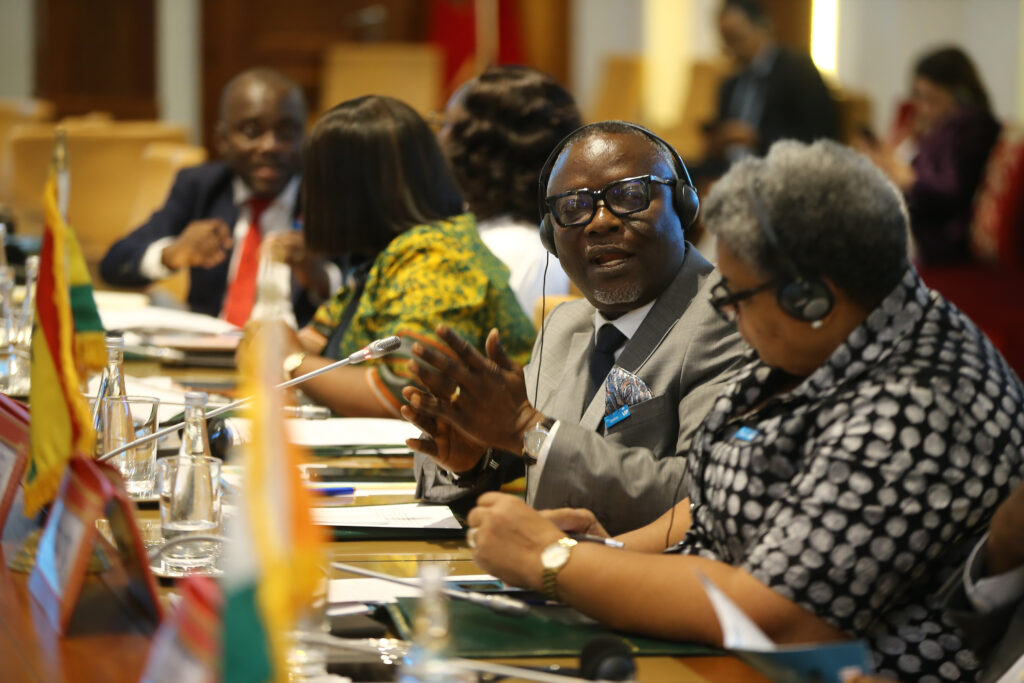
That seed took root quickly. On 6 May 2026, Morocco’s House of Representatives hosted their own Open Parliament Day as part of a regional conference titled Towards an Open Africa, and it was at this gathering that the African Network of Open Parliaments was officially launched.
The event brought together parliamentarians, civil society organisations, and international partners in a spirit of collaboration and shared purpose. The network that emerged includes parliaments from Morocco, Côte d’Ivoire, Ghana, Benin, and Senegal, and remains open to other African parliaments that share its commitment to transparency, citizen participation, and democratic reform.
The network’s agenda reflects the most pressing challenges and opportunities facing African legislatures today: building stronger democratic parliamentary practices; advancing digital openness and access to information; promoting youth and women’s participation; deepening collaboration with civil society; and using artificial intelligence responsibly to improve transparency and accessibility.
The launch of this network is both a proud milestone and a starting point. What began as a single conversation between two parliamentary delegations at a summit in Spain has grown into a genuine platform for peer learning, democratic innovation, and shared progress across Africa.
It is a striking example of how international convenings, when paired with the right follow-through, can generate lasting institutions.
Photos: House of Representatives of the Kingdom of Morocco.
